Friday, April 24, 2026 (8:15 AM — 9:00 PM) Register Here
University of Maryland, Baltimore County
NSF AI Ready TRACE Test Bed Workshop – Program Agenda
Vision
TRACE envisions a scalable, AI-driven, multimodal, human-centered testbed that strengthens disaster resilience and accelerates emergency response and recovery. We integrate robotics (UAVs, UGVs, USVs), IoT sensing (RGB, LiDAR, mmWave, audio), and social signals with trustworthy AI to detect life signs, assess damage, and coordinate teams in rugged, network-denied settings. TRACE advances navigation, multi-agent communication, and virtual-physical co-simulation for realistic training and evaluation. With human-in-the-loop feedback and ethical safeguards, TRACE turns streaming spatio-temporal data into actionable awareness, measurable resilience, and faster, safer decisions. More Information about the TRACE Test Bed is available at https://cypress.umbc.edu/testbed/trace/
Program Agenda
The TRACE Workshop brings together researchers and practitioners for a day of technical presentations, panel discussions, live testbed demonstrations, and poster sessions, fostering collaboration around AI-driven robotic platforms for disaster resilience and emergency response.
8:15 AM - 8:45 AMAOK Library Gallery
Coffee with Light Breakfast Badge Pick-up / Poster Setup
8:45 AM - 9:00 AM
Welcome and Introductory Remarks from the UMBC Leadership & Federal Sponsors
UMBC Leadership


Federal Sponsors

Sudharman Jayaweera
Program Director, Emerging Technologies Section
Directorate for Technology, Innovation and Partnerships (TIP)
U.S. National Science Foundation (NSF)

Jade Freeman
Chief, Battlefield Information Systems Branch
DEVCOM Army Research Laboratory
9:00 AM - 9:15 AM
Keynote 1: NSF Vision on AI-Ready Test Bed

Wendy Nilsen
Deputy Directorate Head at
National Science Foundation
Abstract: As the explosion of artificial intelligence (AI) across homes, business and countries across the globe, it is clear that we need new methods to test and evaluate AI systems before they are deployed. Benchmarks are effective, when available, but many areas that AI touches have no benchmarks. Further, pilots provide evaluation, but are often decoupled from the systems and humans that they would interact with if deployed. These issues prompted the National Science Foundation in 2024 to put out a call for AI-Ready Testbeds. The goal was to explore new methods for evaluating AI in dynamic environments before deployment. Including interaction with human users. This effort continues now with NSF continuing to look at ways to best create new AI models and systems that are safe, reliable and robust. This talk will explore these issues and look at potential future efforts.
Biography: Dr. Wendy Nilsen, Ph.D. is the Deputy Directorate Head of the Computer and Information Science and Engineering Directorate at National Science Foundation (NSF). In her leadership roles at NSF, she has shepherded the division through the explosion of artificial intelligence research. She has also been involved in a wide range of programs to support the innovation ecosystem for AI, including the National AI Institutes. Recently, she partnered NSF efforts with NVIDIA to support the Open Multimodal AI Infrastructure to Accelerate Science to drive new research in AI models and support AI for scientific discovery. Prior to her current position, Wendy has been widely recognized across the Federal government as a leader in AI for health. She led the NSF-National Institutes of Health Smart Health program from 2013-2020, to support the innovation in computing and engineering in biomedical and public health. Prior to joining NSF, she was at the National Institutes of Health.
Session Chair: Sharad Mehrotra
9:15 AM - 9:45 AM
Introduction to the TRACE Test Bed & Capabilities


9:45 AM - 10:00 AM
Keynote 2: Mobile Systems and Robotics Testbeds: Experiences and Insights
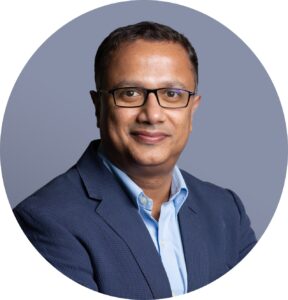
Archan Misra
Singapore Management University
Abstract: I shall first describe my experiences in, and lessons learnt from, developing, deploying and maintaining LiveLabs, a highly successful and long-running mobile systems testbed program (deployed across multiple venues including a university campus, a convention center, a tourist resort and multiple shopping malls), that underpinned many breakthroughs in mobile analytics and mobile sensing-based “smart city” applications. I shall describe LiveLabs’ approach of combining infrastructural instrumentation and mobile/wearable sensing, together with an extensible intervention platform, to create real-time human behavioral insights that fostered multiple service innovations for businesses and urban public agencies. I shall also share ongoing research related to embodied AI and human-robot collaborative technologies, twinned to the creation of a new service robotics testbed that combines simulation-driven digital twins with real-world deployments in commercial public spaces.
Biography: Archan Misra is Vice Provost (Research) and Lee Kong Chian Professor of Computer Science at
Singapore Management University (SMU). Over the past decade, Archan has provided leadership to a
number of large-scale research initiatives and testbeds at SMU, cumulatively worth more than USD
$70M, developing innovative mobile/wearable computing technologies for urban computing applications.
He is a Program co-PI on the Mens, Manus and Machina (M3S) program, led by MIT/SMART, that is
developing advances in human-robot co-working and the lead PI on a new Singapore-France research
program on Embodied AI. His current research interests lie in ultra-low energy execution of embodied AI
algorithms on IoT and edge devices to support advances in natural human-machine interaction. An ACM
Distinguished Member, Archan holds a Ph.D. from the University of Maryland at College Park, and
chaired the IEEE Computer Society’s Technical Committee on Computer Communications (TCCC) from
2005-2007.
Session Chair: Nirmalya Roy (UMBC)
10:00 AM - 10:45 AM
Panel 1: Physical TRACE Test Bed: Solutions, Challenges & Opportunities
Panelists (Position Statement – 5 mins each):
Moderator: Nirmalya Roy (UMBC)
Jason Hallstorm
Florida Atlantic University
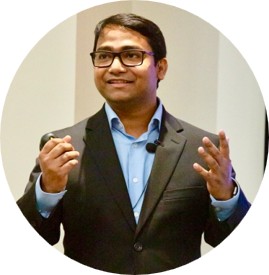
Nirupam Roy
UMD College Park

Suman Banerjee
University of Wisconsin-Madison

Sanjay Madira
Missouri University of Science and Technology
10:45 AM - 11:15 AM
11:15 AM - 11:30 AM
Keynote 3: What Does it Take to Build A Successful Test Bed: An EU Perspective

Andrea Passarella,
National Research Council
(CNR), Italy
Abstract: SLICES (Scientific Large Scale Infrastructure for Computing/Communication Experimental Studies) is a flexible platform designed to support large-scale, experimental research focused on networking protocols, radio technologies, services, data collection, parallel and distributed computing and in particular cloud and edge-based computing architectures and services.
The ambition of SLICES is to provide a European-level research infrastructure for the development of the digital infrastructures of the future. The main emphasis is on supporting scientific communities working in the field of the Future Internet, both in Computer Science and Telecommunications.
SLICES aims to become the primary collaborative experimental tool for researchers at the European level, enabling them to explore and push beyond the current limits of the Future Internet and its related services. It supports experimental research on the next leading scientific topics in the field, primarily “AI-native” networks (where AI becomes a fundamental component of network services) and the integration of quantum communications into Internet networks.
Biography: Andrea Passarella (Ph.D 2005) is a Research Director of the National Research Council of Italy (CNR) and the Director of the Institute of Informatics and Telematics of CNR (IIT). Prior to joining IIT he was with the Computer Laboratory of the University of Cambridge, UK. He has published 240+ papers on Online and Mobile social networks, decentralised AI, Next Generation Internet, opportunistic, ad hoc and sensor networks, receiving the best paper award at IFIP Networking 2011 and IEEE WoWMoM 2013, among others. He is the founding Associate Editor-in-Chief of Elsevier Online Social Networks. He is co-author of the book “Online Social Networks: Human Cognitive Constraints in Facebook and Twitter Personal Graphs” (Elsevier, 2015). He was the chair of the IFIP WG 6.3 “Performance of Communication Systems”. He was and is involved in several expert groups for EU programmes (FIRE, Networld Europe, NGI). He is currently the national coordinator of the SLICES Research Infrastructure, the scientific coordintor of the CNR “Spoke” in the NRRP RESTART (Telecommunications of the Future) Research Programme. He is/was CNR (co-)PI for several research and innovation projects in the areas of Human-centric AI, BigData, FET Proactive, Future Internet, FIRE, FoF, Smart Cities, EIT Digital.
Session Chair: Nalini Venkatasubramanian (UC Irvine)
11:30 AM - 12:15 PM
Panel 2: Digital TRACE Test Bed: Solutions, Challenges & Opportunities
Moderator: Nalini Venkatasubramanian (UC Irvine)
Panelists (Position Statement – 5 mins each):



College of William & Mary
12:15 PM - 1:15 PM
1:15 PM  - 2:00 PM
AOK Library Gallery
Panel 3: Collaborative & Sustainable TRACE Test Bed: A Perspective from the Sponsors
Moderator: Sharad Mehrotra (UC Irvine)
Panelists (Position Statement – 5 mins each):
Sudharman Jayaweera
Program Director, Emerging Technologies Section
Directorate for Technology, Innovation and Partnerships (TIP)
U.S. National Science Foundation (NSF)
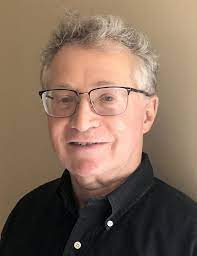
David Corman
Former Program Director
Cyber-Physical Systems (CPS)
Directorate for Computer and Information Science and Engineering
U.S. National Science Foundation (NSF)

Dr. Danielle Sumy
Program Director, National Science Foundation

Andre Harrison
U.S. Army Research Laboratory
2:00 PM - 2::30 PM
Panel 4: TRACE Test Bed: Industry Participation & Commercialization
Moderator: Anuradha Ravi (UMBC)
Panelists (Position Statement – 5 mins each):

Nilavra Pathak
Expedia Group

Bipendra Basnyat
AI Sense

Jim Burke
Kinnami

Theron T Trout
StormFish Scientific Corp.
2:30 PM - 3:00 PM
Panel 5: TRACE Test Bed: Domain Customization & Community Engagement
Moderator: Nalini Venkatasubramanian (UC Irvine)
Panelists (Position Statement – 5 mins each):

Dac Nguyen
Illinois Fire Services Institute, UIUC

Monica Kohler
Dept of Civil Engineering, Caltech

Dan Hoffman
Town Manager, Herndon, Virginia

Brian Cleary
Project Manager, Howard County Gov., MD

Bill Yurcik
Federal Lead, U.S. Healthcare Threat Intelligence, Medicare Headquarters
3:00 PM - 3:15 PM
Introducing Remote Access to TRACE Test Bed
Session Chair: Anuradha Ravi (UMBC)
3:15 PM - 3:45 PM
Panel 6: Takeaways & Feedback for the Next Workshop
Moderators: Nalini Venkatasubramanian (UC Irvine) & Sharad Mehrotra (UC Irvine), Nirmalya Roy (UMBC)
All Participants
3:45 PM - 4:15 PM
4:15 PM - 5:30 PM
Visit to TRACE Test Bed
Room: TRC 002
5:30 PM - 6:30 PM
Break / Driving to Dinner Venue
6:30 PM - 9:00 PM
7791 Arundel Mills Blvd
Hanover, MD 21076
Workshop Venue & Directions Details:

Albin O. Kuhn Library and Gallery (1st Floor)
1000 Hilltop Circle, Baltimore, Maryland 21250
University of Maryland Baltimore County
Visitor Parking Details:
Visitor parking is available at ‘Pay-to-Park’ lots. Visitors pay at the pay station and must properly enter their license plate information at the pay station. Please note, receipts are no longer required.
Pay Stations for visitor ‘Pay-to-Park’ spaces are ADA compliant and visitors with a disabled plate/placard will need to pay when parking in these areas.
Visitor parking spaces are located at Administration Drive Garage upper level, Commons Garage first level, Walker Avenue Garage upper level, Lot 9 and Lot 7 on Walker Avenue.
Visitor parking is $2.00 per hour and payable by MasterCard, Visa or exact currency, no change or refunds provided. Visitor parking is enforced Monday-Friday from 8:00 am until 4:00 pm.
USE THE APP TO PAY!
Visitors may now use the Passport Parking App or Park Mobile to pay for parking. Simply download the app and you can pay with your phone or device. Paying to park has never been easier.
Travel: BWI Airport & Hotels:
Nearest Airport – Baltimore/Washington International Thurgood Marshall Airport (BWI)
Distance to UMBC: approximately 15 minutes / 8 miles via I-195 W.

TRACE Sponsors

Planning: AI-Ready: TRACE: Testbed for Disaster Resilience Auditing and Crisis Evaluation